Citi Bike must prioritize service in underprivileged neighborhoods.
Neighborhoods on the outskirts of Citi Bike’s service area experience lower reliability compared to those closer to the center. These areas are often home to Black, Latinx, and low-income residents. The result is an inequitable public service.
It’s not just reliability. Fares have gone up five years in a row. A 45-minute e-bike ride now costs $12, pricing out the New Yorkers who need it most.
Together, we can push for change to ensure every resident has a reliable and affordable biking option.
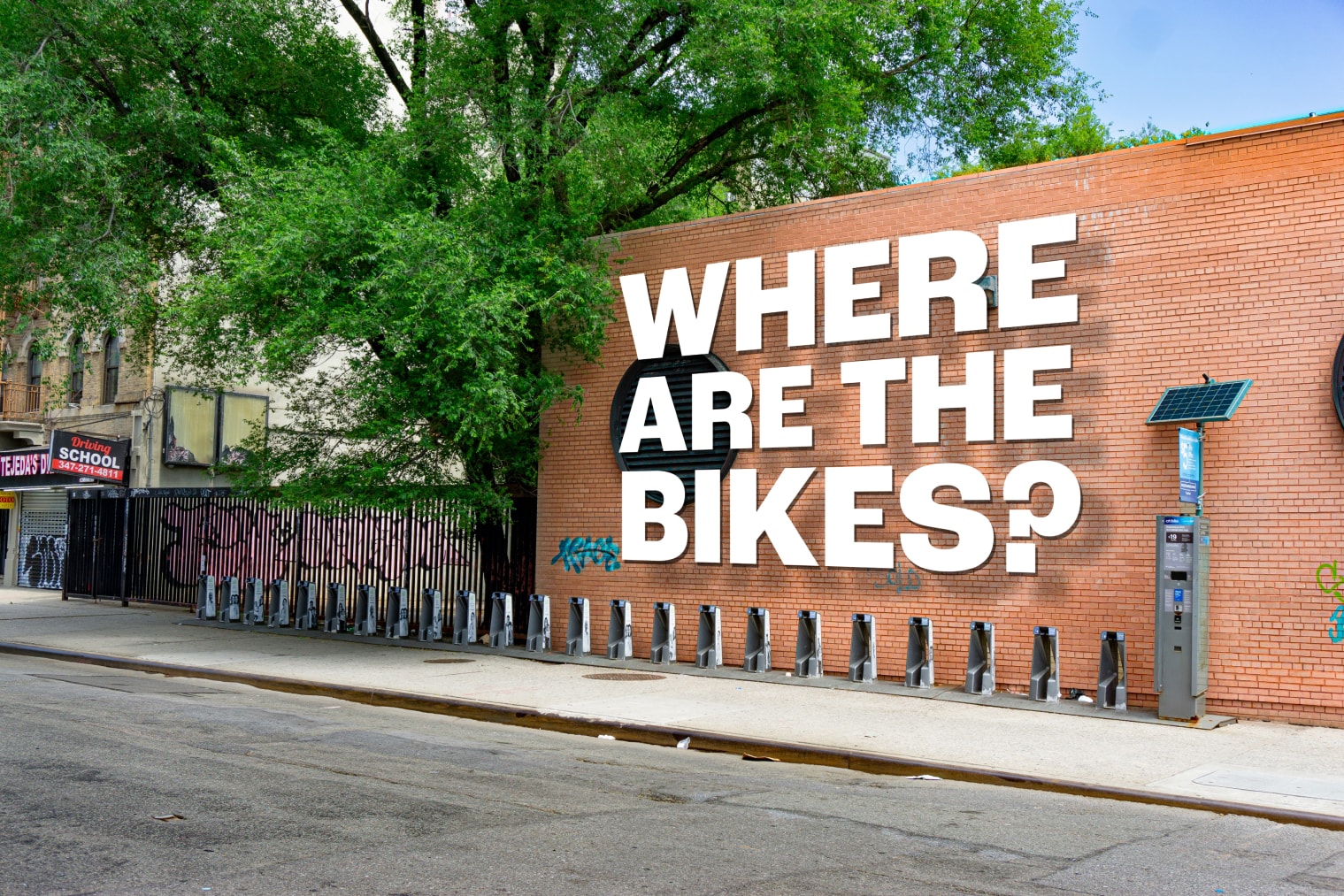
An empty Citi Bike station in the Bronx
Calling for
Better balancing
Fewer empty docks, fewer full docks
Affordable fares
Cap e-bike fares and expand discounts
Public funding
Bike share is part of the city's transit system and must be funded as such
Transparency
Lyft must report neighborhood-level metrics to ensure accountability
The problems
Unreliable service on the edges of the network
- Neighborhoods on the edge of the network suffer more from unusable stations. This disproportionately affects Black, Latinx, and low-income residents.
- Rebalancing bikes dropped 80% from 2014-2019 to 2022.
- Riders in the Bronx are 89% more likely to encounter unusable stations compared to other boroughs.
Lack of contract enforcement
- Despite numerous service failures, the city hasn’t enforced the performance standards agreed by Lyft.
Rising costs
- A 45-minute e-bike ride costs $12. That's ten times the price in Tokyo or London, and double most US cities.
- Prices have gone up five years in a row. Annual membership is now $239, up 77% since 2013.
- Current discounts for NYCHA and SNAP recipients are great, but they are inadequate and convoluted for many low-income New Yorkers.
The solutions
- Lyft, which operates Citi Bike, must prioritize maintenance in underserved areas to ensure equitable service.
- The city needs neighborhood-level performance standards for Lyft to follow. The results should be shared publicly.
- The city must respond to Lyft’s service performance with fines when compliance isn’t met, and rewards when performance is good.
- The city must fund Citi Bike publicly and run it as part of the transit system, the way peer cities do.
- Cap e-bike fares at an affordable rate. $3 for a 45-minute ride is a fair target.
- The city, not Lyft, must fund low-income discounts, with simpler and broader eligibility.
Read the Comptroller's report
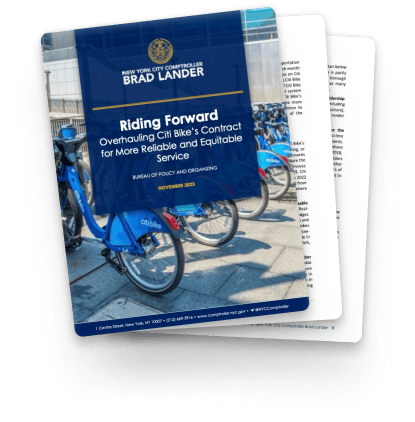
How much is Lyft falling short? Where should the city help? Find out in the Comptroller's report from November, 2023.
Citi Bike is a bike-sharing system operating in New York City. Riders can rent bikes at designated stations using an app or membership card and return them to any other station in the network. It is operated by Lyft, a ride sharing company. Citi Bank, ranked the second biggest fossil fuel funder in the world, sponsors the program to greenwash its brand.
Our primary aim is to push Lyft to improve Citi Bike services in underserved neighborhoods. This includes ensuring more reliable bike availability and better maintenance in areas where access has been inconsistent, particularly in communities predominantly inhabited by Black, Latino, and low-income residents.
Some New York City neighborhoods underserved by transit include:
- Brooklyn: Bay Ridge, East New York, Brownsville, Canarsie, and Coney Island
- Queens: Jackson Heights, Far Rockaway, and Jamaica
- The Bronx: Mott Haven and Hunts Point
- Staten Island: Island is not connected to the rest of MTA's transit system, relies of limited ferry service and car ownership
Indirect routes often force residents to travel through Manhattan, which can be out of the way from their destination. Neighborhoods on the edges of the transit system experience longer commutes and worse service. This issue extends beyond subways and buses to include traffic violence rates and Citi Bike availability.
In New York City, transit inequality means some neighborhoods, especially those with lower-income residents, have fewer good transportation options compared to richer areas. This makes it harder for people in those neighborhoods to get to work, school, or important places they need to go. Transit inequality furthers the climate crisis by encouraging marginalized communities to rely on cars that pollute our air.
In November 2023, the NYC Comptroller published a report on the failures of Citi Bike. The
Comptroller found that Citi Bike riders in the Bronx are 89% more likely to encounter an
unusable station than riders in other boroughs.
And it's not just the
Bronx.
Many neighborhoods, especially those near the edge of Citi Bike's service area, experience worse
service. This disproportionately affects communities of color and lower-income areas.
The
system is also increasingly unaffordable. A 45-minute e-bike ride now costs $12, ten times the price in Tokyo or London, after five straight
years of price hikes.
Lyft, which runs Citi Bike, has raised prices every year since 2021. The latest hike came in 2026, pushing annual membership to $239 and raising e-bike fees again. Unlike most peer cities, New York gives Citi Bike no public operating subsidy. That leaves the cost of running and expanding the system on riders and on Citi Bank's sponsorship. Fund bike share like the subway and buses, and fares can come down.
This is a neighbor-run campaign of transportation and climate activists. Equitable bike share is key for
the
future of low-carbon transit in NYC.
Contact us